Key Takeaways
- Popping and rumbling tones usually trace back to sediment settled at the tank bottom, while ticking or humming more often comes from flow, venting, or expansion elsewhere in the system.
- A noise from the tank is an early report about conditions inside it, so acting on it protects hot water comfort, efficiency, and budget.
- Recording when a sound starts, how loud it is, and whether hot water use triggers it gives a plumber a faster, more focused diagnosis.
- Popping, rumbling, and knocking usually trace to sediment on the tank floor, while a screech points toward a valve or flow restriction, so naming the sound narrows the cause before any work begins.
What Does It Mean When a Water Heater Rumbles or Pops?
A water heater making noise is a symptom, not a single fault. It describes the rumbling, popping, crackling, hissing, or banging sounds that escape a tank or tankless unit while water is being heated. Some tones are ordinary operation. Others, according to Forbes Home, signal sediment collecting in the bottom of the tank.
Knowing which sound you are hearing narrows the likely cause. Popping and rumbling usually point to that sediment, while ticking or humming can trace to flow, venting, or expansion elsewhere. Some cases respond to a tank flush or a minor adjustment, but persistent banging, leaking, or water that never gets hot deserves a look from the licensed, seasoned professionals at Litteken Plumbing through the online contact form.
What Does a Water Heater Making Noise Mean?
When a tank starts rumbling, heed it, because a water heater making noise is reporting what is happening inside the tank, and that early report usually matters far more than the sound itself. The topic covers every sound the unit produces while heating or refilling between cycles, including popping, cracking, rumbling, knocking, screeching, and tapping. The Forbes Home guide notes that when the water heater is making noises, this is often a signal of sediment collecting in the bottom. For many homeowners, that sediment story explains the first pop heard in the basement at night. Why does this matter? Few household appliances work a steadier shift, because the tank reheats around the clock to keep showers, dishes, and laundry running. Noise is usually the first and cheapest warning a homeowner gets, arriving before efficiency slips, utility costs climb, or a full replacement becomes the only practical path. Paying attention protects comfort, hot water supply, and household budget at the same time. Note when the sound began, how loud it runs, and whether it follows hot water use, then share those details, because a licensed, seasoned plumbing professional at Litteken Plumbing can turn that description into a focused diagnosis.
Why Does Your Water Heater Pop and Rumble?
Sediment collecting at the bottom of the tank drives most popping, rumbling, and knocking, because mineral debris traps heat beneath the water and releases it in bursts. A widely referenced water heater noise guide also notes that other problems produce their own sounds, including knocking, screeching, and tapping, so naming what you hear narrows the diagnosis before anyone opens a panel.
- Sediment is the usual culprit. Mineral debris that has settled on the tank floor traps heat under the water and releases it as a pop or crackle.
- The sound rarely arrives all at once. It usually begins as an occasional rumble, then grows louder as more sediment accumulates over many heating cycles.
- Watch for companions to the racket: fading hot water volume, discolored water at a tap, or a temperature that swings without any change in settings.
- Hard water speeds the buildup. Areas with heavy mineral content deposit more scale on the tank floor, which amplifies the popping you hear.
- Screeching is a different story. That higher pitched sound usually traces to a valve or flow restriction rather than debris sitting in the tank.
Match the Sound to the Cause
- Rule of thumb: popping and rumbling that peak during the first heating cycle point to tank sediment, while screeching or tapping that continues when the tank is idle points to a valve or flow problem elsewhere in the system.
Why Your Water Heater Makes Popping Sounds
- 25+ – Years of combined plumbing experience on the Litteken Plumbing team
- #055-043593 – Illinois plumbing license held by Litteken Plumbing
- 5 – Illinois counties served: Madison, St. Clair, Monroe, Clinton, and Bond
At Litteken Plumbing, our licensed, seasoned professionals hear every version of a water heater making noise in most Metro East homes, and the pattern is consistent: the racket starts small, then worsens as the debris layer thickens. Homeowners across Clinton County, where our Trenton shop is based, plus Madison, St. Clair, Monroe, and Bond counties often describe the same progression, a faint rumble in the utility room that eventually carries upstairs. Because we are an Illinois licensed plumbing contractor, License #055-043593, our team can trace the sound to its source instead of guessing.
- Note when the racket appears. A low rumble during a heating cycle, especially the first one in the morning, usually means sediment.
- Listen after the unit has been idle. Tapping or ticking that continues when the tank is off points to a flow or fitting issue rather than tank debris.
- Write down any change in hot water, including weaker flow, cloudy or rusty color, and a temperature that will not hold.
A careful evaluation begins at the tank floor, where sediment collects first, then follows the sound outward to valves, fittings, and nearby piping, so the repair targets the cause instead of the noise.
What Turns Heated Water Into Popping Noises?
Sound from a storage tank begins with one physical process: a burner or an electric element adds heat faster than the surrounding water can carry it off, so pockets of steam form at the hot surface and collapse as cooler water moves back in. Forbes Home ties this sound, in many cases, to sediment collecting in the bottom of the tank, and adds that screeching and tapping noises come from other causes. Listen for that split. Popping, cracking, and low rumbling follow steam working through debris. Ticking or tapping follows water moving too quickly or a part flexing under heat. So a water heater making noise is usually reporting a specific event inside the tank rather than announcing a failure that is already underway.
Why Does Sediment Trap Steam Bubbles?
Tap water carries dissolved calcium and magnesium, and those minerals separate out as the water crosses the hot surfaces inside a tank. Over months that residue settles on the floor of the tank as a grainy layer, and heavier use plus harder supply water builds it faster. Each reheat cycle bakes another thin layer onto the hot surface, so the report tends to deepen over a season. A gas burner heats upward through the tank bottom, so the debris layer sits directly between the flame path and the water above it. When steam forms under or inside that crust, it cannot escape quietly. The pocket pushes upward, gets squeezed by cooler grains, then collapses in on itself with a pop, and the steel shell carries that report across the room so it sounds far bigger than the bubble. Electric tanks work differently, because a sheathed element sits inside the water column, and mineral scale that bakes onto the element sheath blisters steam the moment power is applied. Either design makes the same trade: heat has to cross solid debris before it reaches liquid, and every crossing costs a sound.
How Does Flushing Interrupt That Cycle?
Draining and flushing interrupts that cycle for a simple reason: it removes the material the steam has to fight through. Most storage tanks have a drain valve at the base, and a typical service sequence shuts off the energy source first, runs a hose from that valve to a drain, and opens a hot water faucet to break the vacuum so water actually moves. Cold water is then run through the tank until the discharge looks clear instead of sandy. Once the crust is thinner, heat transfers back into liquid rather than into a solid that has to blister steam past it, which is why the rumble often softens after a good flush. Results vary with water hardness and tank age.
What the Timing Tells You
- Noise that grows louder week by week usually tracks accumulating scale, not a burner suddenly working harder than it used to.
- A water heater making noise only in the first minute of a heating cycle points to steam forming right at the element or burner surface.
- Tapping that follows a faucet being shut off is a flow and pressure mechanism, so describe the timing out loud when you request service.
Which Fix or Upgrade Fits Your Noise?
When a water heater making noise finally demands a decision, you have three realistic routes: service the tank you have, replace it like-for-like, or change the technology. Servicing is usually the least expensive first move because sediment sits at the bottom where the noise starts. Like-for-like replacement keeps your gas or electric hookups unchanged and restores quiet operation. Changing technology means a tankless or heat pump unit. Rheem rates its Pro Terra heat pump models at up to 5X the efficiency of a standard water heater, which cuts energy use, but does not, by itself, address the noise. Rebate paperwork matters: A. O. Smith publishes QM code A5X5 for federal tax form 5695 on its heat pump lines. Forbes notes that heavy daily workloads leave the heater in constant need of repairs over time, so a fix today buys years, not forever. If popping continues after a flush, or you hear screeching and tapping instead, ask Litteken Plumbing’s licensed, seasoned professionals to compare the alternatives against your water, your utility rates, and your budget before you commit to a new machine. Start with the flush, then compare replacement options only if the popping noise returns after that service itself.
Each route solves a different problem, so match the option to the confirmed sound source before pricing equipment.
| Option | Noise it targets | Source-documented detail | Best suited to |
|---|---|---|---|
| Heat pump water heater | Popping from sediment held in stored water | A. O. Smith lists QM code A5X5 for federal tax form 5695 on heat pump units | Cost-focused households: Rheem rates Pro Terra at up to 5X the efficiency of a standard tank |
| Gas or electric tankless | Popping tied to a sediment-holding storage tank | A. O. Smith publishes 2 separate residential tankless lines, gas and electric | Homes wanting no stored-water sediment, though Forbes lists screeching and tapping sounds from other causes |
| Flush and descale the existing tank | Sediment accumulating at the tank bottom | Forbes describes noise as often a signal of sediment collecting in the bottom | The first move before any replacement quote, since it keeps existing gas or electric hookups untouched |
| Like-for-like tank replacement | Noise from an aging unit still on its original tank | Rheem publishes a Replace a Part look up, and A. O. Smith offers a water heater selector quiz for sizing | Homes that want quiet operation without rerouting venting, gas lines, or electrical service |
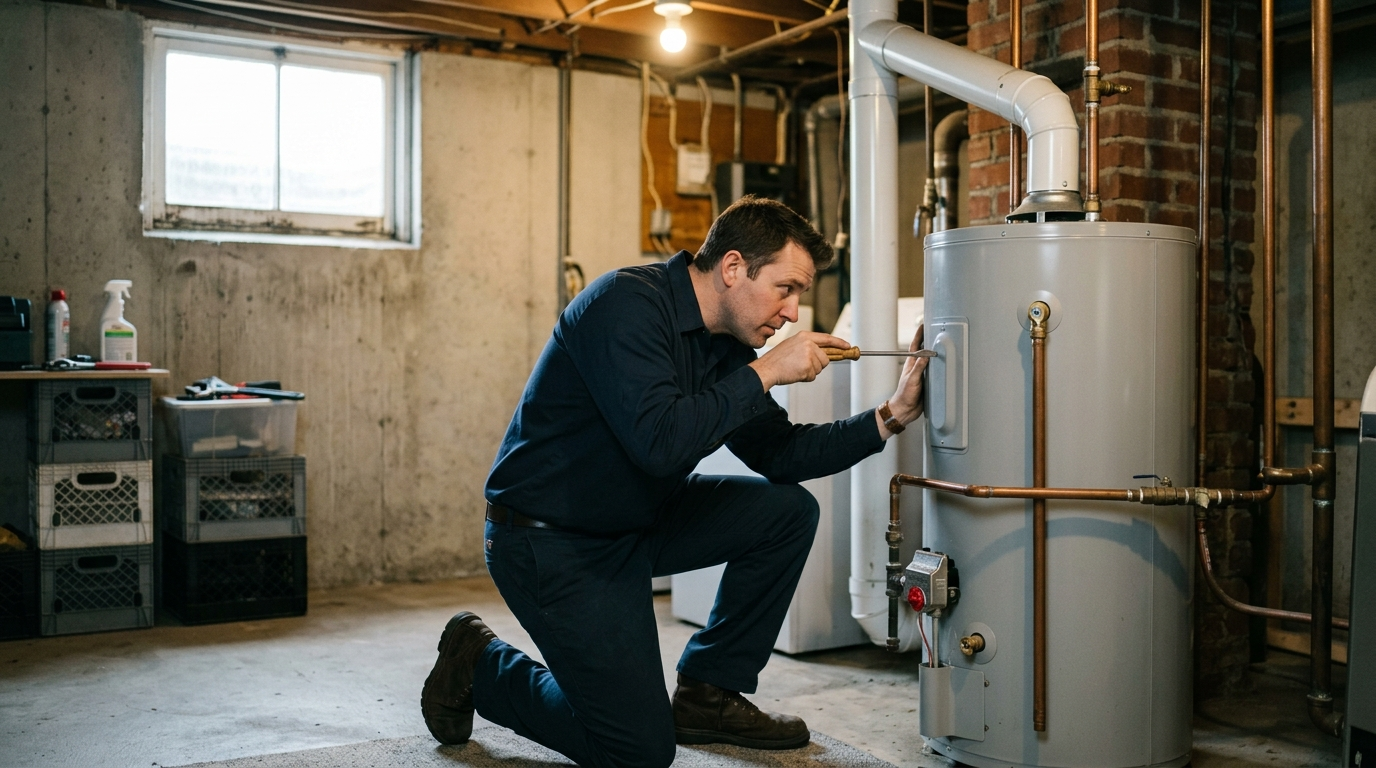
Confirming where the sound originates decides whether a flush, a part, or a new unit is the right option.
Ready to Silence the Noise for Good?
When a water heater making noise breaks the quiet of a normal morning, start with a professional diagnosis, not another week of guesswork. This equipment ranks among the most used appliances in the home, per Forbes Home, so our licensed professionals catch what a homeowner cannot. Litteken Plumbing brings local ownership and more than 25 years of combined team experience to every noisy water heater visit in Trenton; schedule a service visit and we’ll find the source fast.
Frequently Asked Questions
Why is my water heater making noise when nobody is running hot water?
A: Two ordinary things explain it. The burner or element cycles on its own to hold tank temperature, so the unit can be active with every faucet closed, and sediment baked onto the tank floor traps a layer of water that boils off in bursts. The Forbes home improvement team notes that other faults can make the unit produce screeching and tapping sounds too, which is why the character of the noise narrows the search rather than settling it.
What does it mean when a water heater pops or rumbles?
A: Popping, crackling, and low rumbling generally trace back to mineral buildup from hard water sitting on the bottom of a storage tank. That crust insulates the water at the tank floor from the thermostat, so the trapped water overheats, breaks through the debris, and releases with a sound a lot like popcorn. Many homeowners notice the racket growing louder over several months as more sediment accumulates.
Is a noisy water heater dangerous?
A: Most of the time the sound is a maintenance signal, not an emergency. A few findings deserve immediate action: the smell of gas, soot or a persistently yellow burner flame, rust-colored water from a hot tap, or moisture pooling at the base. In those cases shut the unit off following its own label or the manufacturer’s instructions and get qualified help instead of troubleshooting it yourself.
How do I stop my water heater from making noise?
A: With the upkeep the tank actually needs should be begun which means flushing the settled debris, inspecting the sacrificial rod, and, where the supply runs hard, slowing new scale with softening or a filtration step. Many manufacturers publish a service interval in the owner’s manual, so follow your unit’s schedule rather than guessing at one. If the noise survives a proper flush, the source is usually a component, not sediment.
Do tankless water heaters make the same popping sounds?
A: Not in the same way, because an on-demand unit holds little or no standing water, so there is no tank floor for debris to pile on. Noise from a tankless system tends to track with restricted flow, scale on the heat exchanger, a worn blower, or a venting problem, and people usually describe a hum, rattle, or knock instead of popcorn pops. Diagnosing one is a different job than flushing a tank.
When should I call a plumber about a water heater making noise?
A: Call when the noise shows up alongside any of the warning signs, when a correct flush does not quiet it, or when hot water starts running out sooner than it used to. Litteken Plumbing’s licensed, seasoned professionals serve Trenton, Illinois and the St. Louis Metro East and Southern Illinois area, and a noise that flushing cannot fix is exactly the sort of fault their specialty diagnostics is meant to trace while the unit is still heating.