By Chad Litteken | Litteken Plumbing
Table of Contents
Key Takeaways
- A healthy looking pilot flame only proves part of the system is working, because the main burner still needs a sound thermocouple, gas valve, and pilot tube before the tank heats water again.
- A visible pilot flame only proves the ignition source is alive, so cold water means the real problem sits past the pilot, in the burner, the controls, or the gas supply.
- Gas odor at the base of the heater is the one warning sign that should stop a homeowner’s troubleshooting and move the call to a licensed plumber.
What Does This Guide Cover?
“Gas water heater not working pilot light on” refers to a gas storage tank unit whose pilot flame keeps burning while the main burner never fires. Water moves through the tank unchanged, so showers, dishes, and laundry run cold even though the small flame looks healthy.
That is a common plumbing complaint, and it usually comes down to a handful of parts, not a brand new water heater. Litteken Plumbing walks you through the symptoms, what causes each one, what our licensed, seasoned professionals check first, and when to Contact Us instead of relighting the pilot again. According to the Rethority guide, pilot trouble traces to five parts, the thermocouple, pilot tube, flex gas line, burner, and the gas valve.
What Does “Gas Water Heater Not Working Pilot Light On” Mean?
Start with the flame you can see. In a storage gas tank, the pilot is only the ignition source, and the main burner underneath the tank is what actually heats the water. When that burner does not fire, the tank fills cold and showers turn lukewarm fast. That gap between a visible flame and no hot water is what most homeowners mean when they type “gas water heater stays cold despite a lit pilot” into a search bar. The distinction matters because the pilot and the burner fail for different reasons. The pilot is still the starting point, because a pilot flame overview states that the small, characteristic blue flame is essential for a gas water heater to work. When the flame holds and the burner stays cold, look past the pilot toward the controls, the gas path, or the burner itself. Litteken Plumbing works that sequence step by step with licensed, seasoned professionals. Stop at the first smell of gas and call for help. Before you test anything, check your own unit’s documentation; a pilot light repair guide recommends consulting the technical sheet for your specific appliance model before beginning any testing or repairs.
What Causes Cold Water With a Lit Pilot?
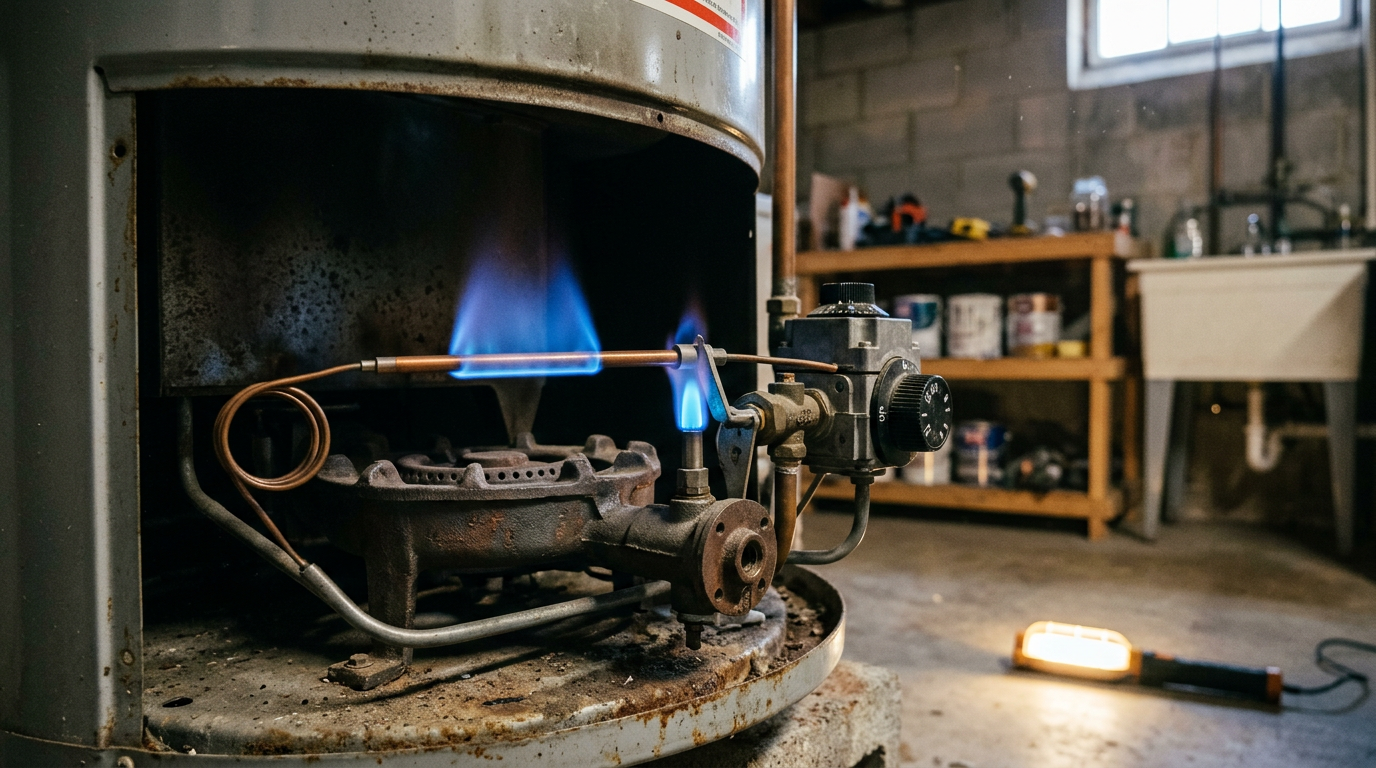
Check the pilot flame first, then the thermocouple, the gas control valve, and the burner. When you find cold water despite a lit pilot this morning, three failure patterns cover most calls: a weak or misdirected pilot flame, a safety part that shuts gas down before the main burner opens, and a burner that fires but never moves real heat into the water. A house with a lit pilot and cold taps is not a mystery. It is a short parts list, and every item on that list leaves its own trace. The pilot assembly is the quickest thing to rule out. A flame that burns small, blue, and steady is doing its job, and the thermocouple sits in that flame to report back to the gas valve. When the flame slips below the thermocouple tip, the valve reads an unsafe condition and keeps gas closed off from the main burner, so the pilot keeps burning while the tank stays cold. Watch the flame for a full minute before you touch a dial or turn the gas knob. A pilot that stays lit but hisses, flickers back from the sensor, or leaves black soot on the metal around it says gas and air are not mixing the way they should. Repair references narrow the trouble down further. The Appliance Parts Pros pilot-light guide lists five common pilot-light causes: a faulty thermocouple, a clogged pilot orifice, a bad gas control valve, air in the gas line, and a drafty installation space. Rethority notes that only a limited number of things can cause the pilot light to go out, which is good news for a homeowner trying to sort this out. The Spruce’s troubleshooting list works the same way, covering the common reasons a gas water heater may not be working so you can settle a current problem and spot the next one.
- Every tap in the house runs cold, not just the shower, which puts the problem at the tank instead of a fixture.
- The pilot flame turns yellow or orange, or it lifts away from the thermocouple instead of burning small and blue.
- You hear the pilot click on and hold, but the main burner never roars to life behind the access panel.
- Hot water lasts only a few minutes, then recovery slows to a crawl or stops completely.
- A gas smell near the base of the heater, the one sign that should end any do-it-yourself attempt.
- Rust-colored water or a rotten-egg smell at the tap even while the pilot is burning steadily.
Flame Color Is the Fastest Clue
- A healthy pilot is small, blue, and sits firmly on the pilot assembly without lifting or flickering.
- A yellow, orange, or wandering flame usually means a clogged pilot orifice, a draft across the pilot tube, or a dirty burner.
- A pilot that holds steady while the water stays cold points at the thermocouple or the gas control valve, not at the tank itself.
- If “water heater stays cold despite a lit pilot” is the search you keep typing, the answer usually lives in that flame and the valve behind it.
- If you smell gas, leave the area, avoid switches, flames, and sparks, and have the heater checked before anyone tries to relight it.
Quick Facts
- 5 – Pilot-light causes most repair guides name
- #055-043593 – Litteken Plumbing contractor license on file
- 3 – Illinois counties served: Madison, St. Clair, Monroe
- 25+ – Years of combined team experience
What Is the Right Troubleshooting Order?
Work the problem in order, not by luck. When a gas water heater is not working and the pilot light stays on, the sequence runs from the flame itself to the gas control, then to the pilot assembly and thermocouple, then to the paperwork printed on the tank before anyone turns a screw. Homeowners typing “gas water heater not working pilot light on” into a search box are usually describing one of two things: a flame that looks wrong, or a flame that looks fine while the tank stays cold. Those two conditions need different checks, which is why the order matters more than effort. We keep the list short because the hardware is simple. A burner, a thermocouple, a gas control valve, and a flue do most of the work, and a standing pilot flame is the gate the rest of that heating depends on, since a gas unit cannot heat the water inside the tank without it. When hot water stops arriving, one of those parts is usually the reason. The Spruce keeps a running list of the common reasons a gas water heater may not be working, and the value of any such list is that it keeps you from buying parts in the wrong sequence. Start with what you can see with your own eyes, write it down, then move inward one stage at a time, and never start with a new part.
What Should You Check First?
Look at the flame before you touch a knob. A standing pilot that burns steady and blue tells you something different than a yellow tip, a lazy flame, or a pilot that drops the moment you release the knob. Use a flashlight at the viewing window and write down what you see, because that single observation drives every step after it. Appliance Parts Pros sorts pilot trouble into five common reasons: a faulty thermocouple, a clogged pilot orifice, a bad gas control valve, air in the gas line, and a drafty environment. Treat that list as a diagnostic ladder, not a shopping list. A bad gas control valve is the entry on that ladder we do not ask homeowners to test, because the valve is the part that decides whether gas reaches the burner at all. The thermocouple and the draft are the two we check by eye first, since both can stop a pilot from doing its job with nothing missing and no tools involved. Confirm the flame, clear the cheap cause, then face the expensive one.
Where Does the Repair Sequence Come From?
Read the label before you relight again. Litteken Plumbing stops the homeowner side of the sequence there, and a licensed, seasoned professional takes it on from the label instead of from memory.
- Watch the pilot flame and note its color, height, and steadiness.
- Confirm the gas control sits on the pilot setting the dial shows.
- Smell near the burner before you light anything, and leave if you detect gas.
- Move boxes, rags, and lint away from the flame spout and air openings.
- Photograph the data plate and the printed ignition sequence on your model.
- Hand that photo plus your flame notes to a licensed professional.
Where the sequence stops
- If you smell gas anywhere in these steps, stop the sequence, leave the area, and call for help from outside the house.
- A pilot that will not hold after two attempts is a parts or control problem, not a patience problem.
- Manufacturer instructions on your own unit outrank any generic checklist, including this one.
Relight, Replace Parts, Or Swap The Tank?
Most homeowners searching for a water heater that stays cold despite a lit pilot want one answer: how much of this can I handle myself? Three options cover the field. First, confirm the flame. Pilot light trouble is one of the common reasons a gas water heater may not be working, and a steady blue flame means the problem is past the pilot. Second, order the failed part. A parts retailer’s DIY guide names a faulty thermocouple, clogged pilot orifice, bad gas control valve, air in the gas line, and a drafty location as the five usual causes. The same guide says most orders arrive in two business days. Third, call a licensed pro when the work touches the gas train. We do not suggest pulling a gas control valve or a flex line without training. If you replace the tank, A.O. Smith lists QM code A5X5 on federal tax form 5695 for its heat pump water heater models. Start with the flame check, then buy parts for a cause you can name, and weigh repair against replacement before you spend.
Option | What It Addresses | Who Does The Work | Figure The Source Gives |
|---|---|---|---|
Relight the pilot | A pilot that is out, yellow, or drifting | Homeowner, following the sequence printed on the unit label | Pilot light trouble is one of 6 listed causes on The Spruce’s gas heater list |
Replace the thermocouple | Flame lights, then dies before the main burner fires | Homeowner with an ordered part, or a licensed pro | Faulty thermocouple is cause 1 of 5, and most orders arrive in two business days, per this parts DIY guide |
Clean the pilot orifice and pilot tube | Debris or a drafty install location starving the pilot flame | Homeowner with the manual, otherwise a licensed pro | The pilot tube is case 2 of 5 on Rethority’s list of five causes, last updated February 24, 2024 |
Replace the gas control valve, or replace the tank | A failed valve, or an aged tank where repair no longer pays | Licensed plumber only, since the valve sits on the gas train | The main thermostatic control or gas valve is case 5 of 5 in the Rethority review, and a heat pump replacement brings A.O. Smith’s QM code A5X5 for federal tax form 5695 |
Ready for Reliable Hot Water?
If your search for “gas water heater not working pilot light on” brought you here, and the tank still runs cold after relighting, the next step is a licensed diagnosis. Litteken Plumbing’s licensed, seasoned professionals bring over 25 years of combined experience to gas water heater service in the St. Louis Metro East, so thermocouple, gas valve, and burner checks happen in one visit. Review these common reasons at The Spruce, then request service from our own crew. Contact us today.
Our licensed, seasoned professionals at Litteken Plumbing work that same list top to bottom on every water heater call in Madison County, St. Clair County, or Monroe County, Illinois, and we tell you which part failed before we order anything.
That is where Litteken Plumbing’s licensed, seasoned professionals, License #055-043593, earn the service call.
We serve homeowners and businesses in the St. Louis Metro East and Southern Illinois region, so tell us what the flame is doing and we will match the right service to it, including telling you plainly when the fix belongs to a gas or appliance specialist instead. Small enough to care, big enough to deliver.
Frequently Asked Questions