By Chad Litteken | Litteken Plumbing
Table of Contents
Key Takeaways
- Compare one weak outlet against normal cold taps one at a time, because a single changed fixture usually points to the fixture, while several cold outlets weakening together point to the supply or property side plumbing.
- A visibly weak stream is an observation, not a pressure reading, so real testing is what confirms the cause before anyone replaces parts or calls the water supplier.
- A tap-by-tap check only shows changed flow, so treat the pattern across fixtures as the useful clue rather than the bucket test itself.
- Decide which outlets dropped before you call anyone, because one weak fixture and several weak cold taps point in different directions.
Why Does Weak Water Flow Show Up at Only Some Fixtures?
Low water pressure in house plumbing is a weakened flow from taps, showers, and appliances, and it rarely means one single failure. When you ask what is water pressure, Ofwat’s answer is direct: it is the force that pushes water through pipes, and it determines the flow at every tap. A weak shower next to a healthy kitchen sink is a clue, not a measurement, because a weak stream is something you can observe at the fixture rather than read from a gauge. This guide covers those causes, the safe checks you can do at home, and the point to Contact Us to schedule service.
What Is Low Water Pressure in House Plumbing?
Water pressure is simply the force pushing supply water through your pipes. When that force drops, low pressure in your plumbing shows up as a weak shower stream, a slow sink, and a kettle that takes too long to fill. The U.K. water regulator Ofwat notes that some modern heating appliances and showers will not work below certain pressure levels, so a trickle is more than an annoyance. What you can observe at a tap is flow, not a measured pressure reading, so a bucket test narrows the pattern but does not prove a faulty valve or pipe. That distinction matters. Litteken Plumbing treats weak flow at several cold outlets as a wider supply question, and the same symptom at one fixture as a tap-specific one. A partially closed valve at a shower or sink is a common and simple cause, according to The Spruce. Reading that pattern first is what tells us where the diagnosis starts: at the supply side, or at one fixture. In our experience, a quick tap-by-tap read comes before any equipment purchase.
Why Do Several Fixtures Run Weak at Once?
Start with the shutoffs, then the fixtures, then the supply. In most calls we work on, a low-pressure complaint traces back to a partially closed valve somewhere in the system, not to a failed main. At Litteken Plumbing we often see homeowners spot the trouble first at the kitchen sink, then notice the shower has gone soft the same week. When every cold faucet in the house drops at once, the question stops being about one fixture and becomes about the property side of the line or the supply feeding it. Our licensed team covers Madison County, St. Clair County, and Monroe County, Illinois, so we can compare your pattern with what other homes on the same street are reporting.
Is One Faucet Weak Or Every Faucet?
Sort the problem by counting the outlets it touches. The guidance in this U.K. problem guide is to compare your normal cold taps one at a time and judge each against its own usual flow instead of expecting different fixtures to deliver identical streams. One weak tap usually means one small cause: a screen or aerator packed with sediment, or a fixture valve nobody opened all the way back after a repair. Several cold outlets changing together point to a wider supply or property-side issue. Keep that split honest, because flow is not a pressure reading: only suitable pressure testing can establish a pressure reading, and no bucket check produces one. Elevation belongs in the conversation too, since height sets the ceiling, meaning a service reservoir’s height and how much water other customers are using govern what reaches your tap, and properties at the top of a hill may receive lower pressure than properties at the bottom. Write down what you observed instead of claiming a PSI figure you cannot measure.
Where Do You Check the Main Shutoff?
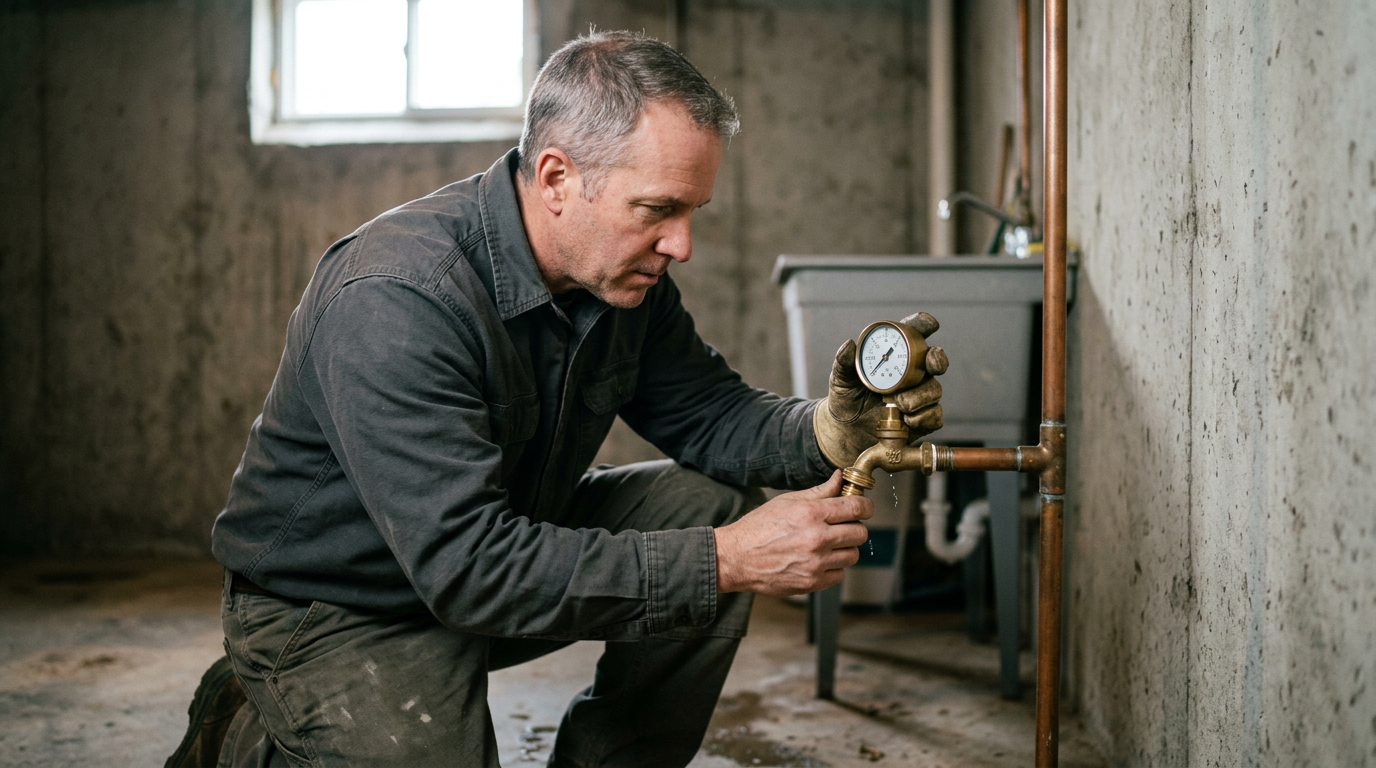
Open the main valve fully before you accuse the utility. It sits where the supply line enters the house, often in a basement wall, a crawlspace, or a curb box near the meter, and a handle left a fraction short restricts flow to every fixture downstream. Individual valves tell the same story on a smaller scale. According to The Spruce, water pressure problems can also be caused by partially closed individual valves, such as the valves on showers and sinks, which happens when the water is turned off briefly for a repair and never turned back on all the way. That single mistake stops water from the main valve flowing freely, and it is the cheapest possibility on the list, which is why we ask callers to confirm it before we schedule anything. Turn each shutoff you can reach to the open position, then run one cold tap and watch whether the stream firms up.
- A main or fixture shutoff left partly closed after a repair
- Sediment packed into an aerator screen, a showerhead, or a shower valve
- Several cold faucets running weak at the same time, per Ofwat’s pressure guidance
- A trickle that stretches the time it takes to fill a kettle or a toilet cistern
- Scale buildup narrowing aging galvanized supply pipe
- A shower that will not run because it needs minimum pressure to operate
Flow Is What You See, Pressure Is What You Measure
- A weak stream is a symptom you can see; a pressure reading is a measurement you need a gauge for.
- When several cold outlets change together, work from the meter inward instead of replacing fixtures one by one.
Quick Facts
- 3 – Illinois counties we serve
- #055-043593 – Illinois plumbing license
- One at a time – Cold taps compared per test round
- Pressure gauge – Tool that turns a symptom into a reading
What Order Should You Check Things In?
Work the problem from the simplest cause to the hardest one, and stop as soon as the pattern narrows. When low water pressure shows up at more than one fixture, our licensed, seasoned professionals start at the main shutoff, then compare fixtures, then move toward the pressure-reducing valve and the supply side. A U.K. plumbing industry problem guide uses the same first move: compare your normal cold taps one at a time and note whether the weak flow is new, comes and goes, or follows other water use. That single observation decides which branch of the search you continue down, and it costs a few minutes at the sink. Order matters because the free fixes sit at the front of the list.
Is It One Fixture or the Whole House?
Decide whether one fixture is weak or the whole house is before you change anything. That split is the most important step in the sequence, because it separates a local restriction from a supply problem and points your next hour in the right direction. A shower that runs slow while the kitchen tap fills normally is a shower problem, such as a partially open fixture valve, a clogged spray plate, or a restricted line behind the wall. Cold taps across the home dropping at the same time is a house problem, and the likely causes sit upstream near the shutoff and the pressure-reducing valve. The shower usually complains first. According to Ofwat, some modern heating appliances and showers will not work below certain pressure levels.
Which Valve Do You Check First?
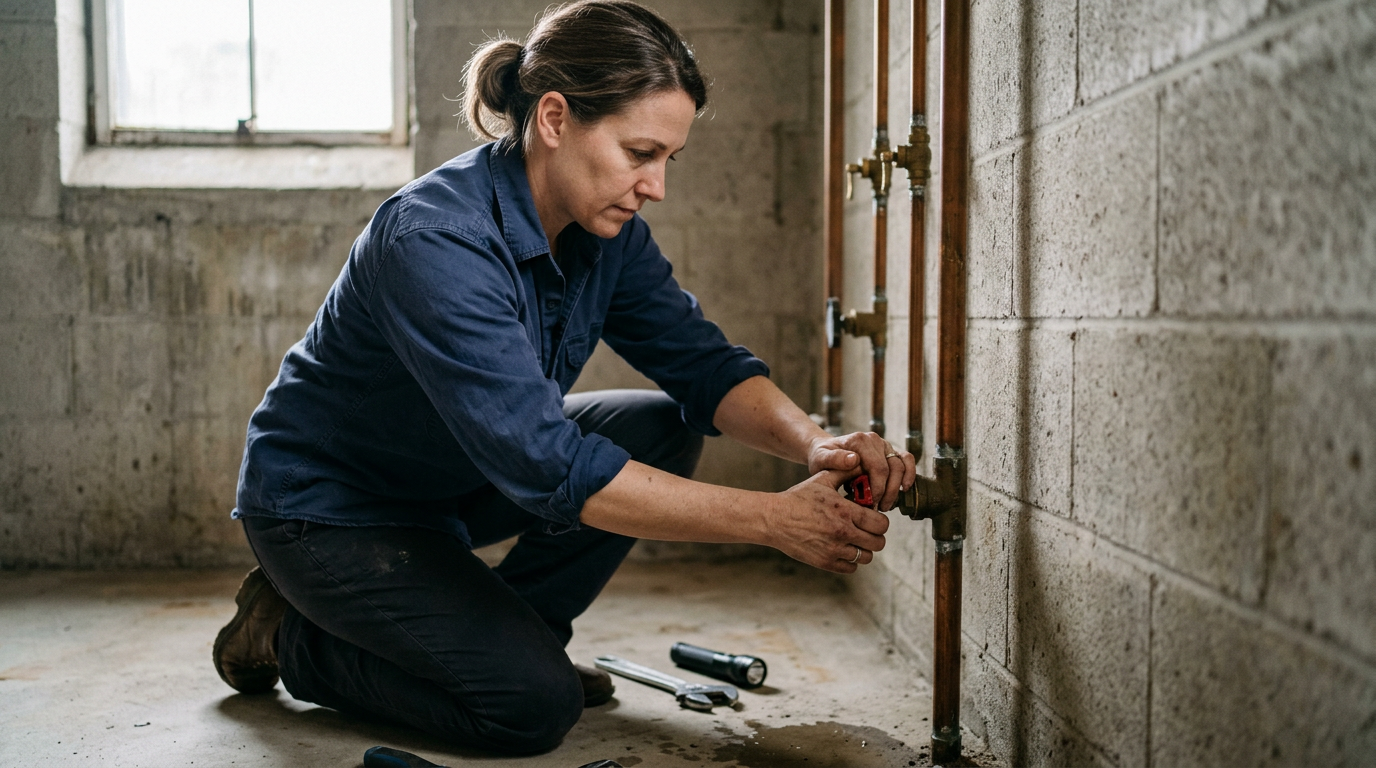
Run the fixture pass from the valves outward, not from the pipes. Each sink, shower, and toilet has its own shutoff, and one can sit a quarter turn from open long after whoever closed it forgot. The Spruce names partially closed individual valves, including the valves on showers and sinks, as a cause of pressure problems, and explains the usual story: water gets turned off briefly and never turned back on all the way, so flow from the main valve cannot move freely. Open each valve fully, run that fixture, and compare it to its own usual flow rather than to a different fixture with a different fitting. If every valve is open and several outlets are still weak, the work belongs upstream, and that is where Litteken Plumbing takes the search next.
- Check that the main shutoff is fully open, then walk the house and confirm every fixture valve is open as well.
- Test two or three normal cold taps one at a time under similar demand, comparing each with its own usual flow.
- Run hot and cold separately at one faucet to learn whether the cause sits on the supply side or the heating side.
- Ask a neighbor on your street whether their flow changed at the same time, which sorts a utility problem from a house problem.
- Write down which fixtures changed, when it started, and whether any valve was closed recently, so the first service call is shorter.
- Leave the pressure-reducing valve, any pump, and unfamiliar tank controls alone until a licensed plumber adjusts them.
Rule of thumb: the cheap checks go first
- Partially closed valves can cut flow on their own, so confirm them before you assume trouble inside the pipes.
- A weak stream is an observation, not a measurement, and a real pressure reading takes actual pressure testing.
What Are Your Options to Restore Flow?
Compare the options from no-cost to licensed work, and start at the valves. Most fixes for low water pressure in your home’s piping begin with a shutoff that was closed for a repair and never opened all the way, not with new equipment. When every cold outlet reads weak at once, the cause is upstream. Elevation is one reason: Ofwat’s own pressure guide states that properties at the top of a hill may receive lower pressure than properties which are at the bottom. When a single shower or sink changed, stay at that fixture and check its valve before you buy parts. The practical line between options is scope. Valve adjustment and a tap-by-tap comparison are homeowner work. Measured testing, pipe scale, and a supply-side diagnosis are licensed work, and that is where Litteken Plumbing fits, with licensed, seasoned professionals holding License #055-043593. Take the two no-cost checks first, then pay for one metered reading before you install a pressure-dependent shower or heating unit. That order keeps the expensive alternatives off the table until a reading justifies them.
Option | Best For | Concrete Step or Count | What It Still Cannot Tell You |
|---|---|---|---|
Fully open the main shutoff | Every cold outlet reads weak at once, after a repair or a utility shut | 1 main valve moved from partly closed to fully open, checked before any other step ( Taskrabbit’s valve factors) | How much pressure you now have; a restricted main only explains weak flow, not a measured number |
Re-seat the fixture valve at the weak outlet | 1 shower or sink that dropped after water was turned off briefly and not turned back on all the way | The individual valve at that 1 fixture, adjusted before any part is replaced ( The Spruce on fixture valves) | Whether the outlet is limited by scale or by supply rather than by a valve setting |
Run a tap-by-tap comparison | Routing the call to the water supplier, the building manager, or a plumber | The cold kitchen tap plus 1 or 2 other normal cold taps, tested one at a time under similar demand ( plumber.org.uk safe checks) | No pressure value; that guide warns a bucket or tap comparison does not measure pressure |
Book measured pressure testing | A shower or heating unit with a minimum-pressure requirement before purchase | 1 metered pressure test, plus the supplier’s check on area pressure before installing that equipment ( Ofwat installation advice) | Whether piping diameter or fixture restriction is the real ceiling on flow |
Take the Next Step With Litteken Plumbing
Litteken Plumbing is locally owned, licensed (License #055-043593), and staffed by seasoned professionals who work on residential water lines every week. Pressure, the force that pushes water through pipes, is worth a measured look instead of another weekend of guessing. When low water pressure in house faucets and showers has outlasted your own checks, schedule a plumbing visit and we will tell you what we found, what it takes to fix, and how long the work usually runs. Contact us today.
Litteken Plumbing works under License #055-043593 with licensed, seasoned professionals, so the steps beyond a homeowner’s own checks stay with us.
Frequently Asked Questions