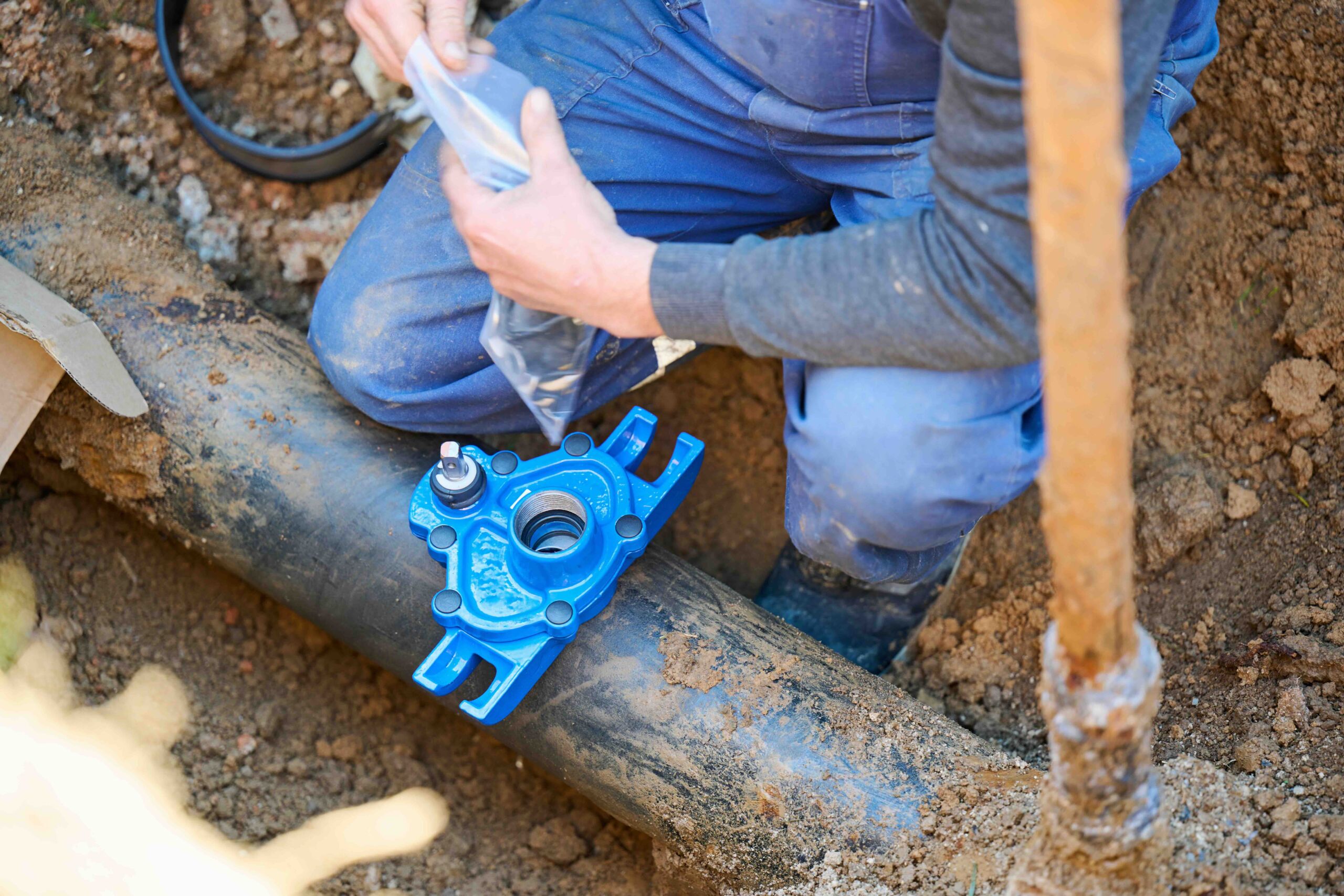
A damaged or leaking water line can disrupt your home’s water supply, drive up utility bills, and even cause property damage. When repairs or replacements are needed, homeowners often face a big question: Should you choose trenchless water line replacement or traditional digging? Understanding the differences can help you make the best decision for your home and your budget.
What Is Trenchless Water Line Replacement?
Trenchless water line replacement is a modern method that repairs or replaces underground pipes without digging up your yard. Instead of excavating a long trench, plumbers use specialized equipment to access the line through small entry points. This technique allows new piping to be installed with minimal disruption to your landscape, driveway, or foundation.
Common trenchless methods include:
- Pipe bursting: A new pipe is pulled through the old one, breaking apart the damaged line as it goes.
- Pipe lining: A resin-coated liner is inserted into the existing pipe and hardened to form a new, durable inner layer.
Both methods are efficient, long-lasting, and environmentally friendly, making them a popular alternative to traditional excavation methods.
Benefits of Trenchless Water Line Replacement
Homeowners choose trenchless water line replacement for several reasons:
- Less damage to property: Because it doesn’t require digging long trenches, your yard, landscaping, and sidewalks stay intact.
- Faster turnaround: Many trenchless jobs can be completed in just one day.
- Durability: The materials used in trenchless methods are resistant to corrosion and root intrusion, extending the lifespan of your plumbing.
- Cost savings: While the upfront cost may be comparable to traditional methods, you’ll save money on landscape repairs and restoration afterward.
How Traditional Digging Compares
Traditional water line replacement involves excavating a trench along the entire pipe route. While it’s effective, it comes with significant drawbacks:
- Extensive yard disruption – Driveways, patios, and gardens often have to be dug up and rebuilt afterward.
- Longer project time – Excavation and restoration can take several days.
- Higher restoration costs – Re-landscaping and concrete repair can add thousands to the total bill.
However, traditional digging may still be necessary if your pipes are severely collapsed, hard to access, or if your property layout doesn’t allow for trenchless equipment.
Which Option Is Right for You?
The best solution depends on the age and condition of your water line, soil type, and property layout. If your system is structurally sound but leaking or deteriorating, trenchless water line replacement is typically faster, cleaner, and longer lasting.
At Litteken Plumbing, our team specializes in both trenchless and traditional water line replacement. We’ll inspect your system, discuss your options, and recommend the most effective solution for your home and budget.
Don’t wait until a small leak turns into a major water problem. Contact Litteken Plumbing today to learn whether trenchless replacement is the right fit for your property.
FAQs About Trenchless Water Line Replacement
Q: How long does trenchless water line replacement take?
A: Most trenchless water line replacements can be completed within one day, depending on the pipe length and condition.
Q: Is trenchless replacement more expensive than traditional digging?
A: While upfront costs can be similar, trenchless replacement often saves money by eliminating yard restoration expenses.
Q: How long do trenchless water lines last?
A: With proper installation, trenchless water lines can last 50 years or more, thanks to corrosion- and root-resistant materials.
Q: Can all properties use trenchless water line replacement?
A: Most can, but extreme damage or collapsed pipes may require traditional excavation. A professional inspection determines the best method.